
Walking is good. Walking is one of the simplest, most accessible ways to stay moving, and we encourage every patient to do it.
The problem isn’t walking. The problem is when walking is your ceiling.
When daily walks are the highest demand you ever put on your body, you have no reserve capacity — no buffer of strength, no buffer of aerobic fitness — to draw on when something goes wrong. And as we age, something always eventually goes wrong: an illness, a surgery, a fall, a hospitalization, a few weeks of bed rest. Without reserve capacity, even a small setback can be devastating.
Two interventions have the strongest evidence for building that reserve in adults over 60: progressive resistance training and ventilatory threshold aerobic work. Walking is the foundation. Lifting and threshold training are what keep you resilient on top of it.
The Research
The evidence is not subtle.
Resistance training. The LIFTMOR trial (Beck et al., 2018) put postmenopausal women with low bone mass through high-intensity barbell training — deadlifts, presses, jumping. Bone mineral density improved at the spine and hip. The control group did gentle home exercise and saw no change. Gentle exercise doesn’t load bone enough to change bone.
Aerobic capacity. Mandsager et al. (2018) studied over 120,000 patients across cardiorespiratory fitness levels. The “elite” fitness category had 80% lower mortality than the “low” category — and there was no upper ceiling where extra fitness stopped helping.
Ventilatory thresholds. Aerobic capacity grows when you train across both VT1 (a sustainable, talkable pace) and VT2 (a breathless, hard pace). If your aerobic life happens entirely at the easy end of the spectrum, you maintain a low ceiling. Reserve capacity comes from periodically training above it.
That’s the prescription. Even at 80. Even at 85.
What Does This Mean for You?
The vast majority of aging adults — including those with osteoporosis, post-surgical histories, prior falls, or decades of inactivity — benefit from progressive resistance training and ventilatory threshold aerobic work.
What evidence-based care actually looks like
Physical therapy sessions for aging adults should include real assessment and real training — not a stretching session and a hot pack. Over the course of care, the work should cover:
- History — injuries, surgeries, medications, sleep, nutrition, daily activity, what you want to do again
- Strength testing — including grip strength dynamometry as a whole-body biomarker
- Body composition — waist-to-hip and waist-to-height, because metabolic risk hides inside a “normal” BMI
- Range of motion and balance — joint mobility, single-leg stance, gait, fall-risk screening
- Aerobic baseline — structured assessment to estimate VT1 and VT2 so we can prescribe aerobic intensity off measured data
- Movement screen — squat, hinge, push, pull, carry, gait
This work doesn’t all happen on day one, and it shouldn’t. It unfolds across the course of care — and it’s what the lifting and aerobic prescription is built on.
Linda, 85, Fitchburg
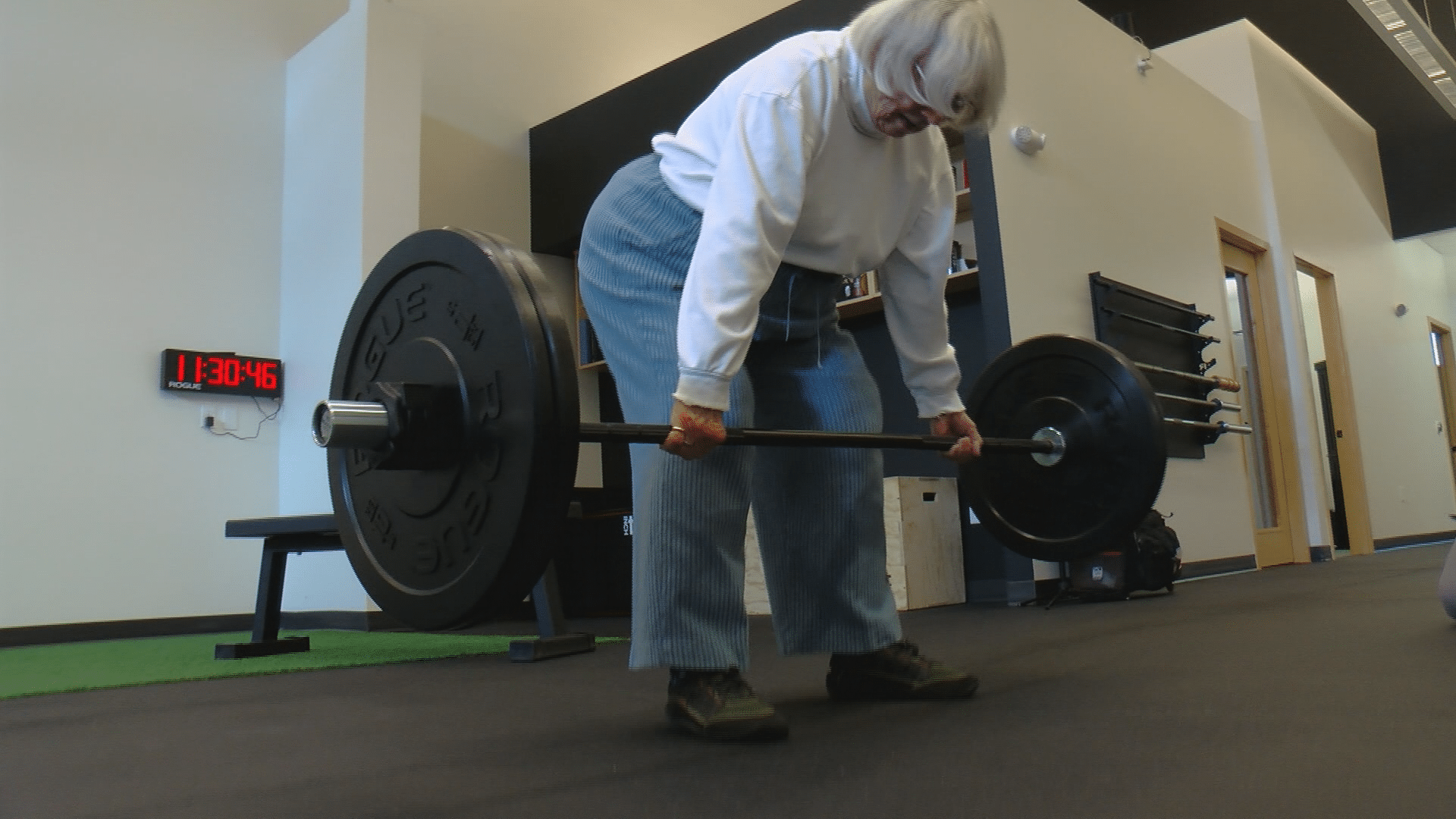
This is not theoretical. Last week, WKOW ran a feature on Linda, a patient of Dr. Michelle LaFave at our Fitchburg clinic.
Linda is 85. A few years ago she had a fall and broke some bones. She came to Forward PT, and we started training her the right way.
Today she deadlifts a barbell off the floor. Her goal is to lift 86 pounds on her 86th birthday — “I’ll tie a pound of butter to the barbell,” she told the reporter.
Her own framing: “You got to use it or lose it, to coin a phrase.”
She is right. What she is doing is not exceptional in design — it is the precise application of the research.
Read the full WKOW story: 85-year-old woman aims to deadlift 86 pounds — WKOW.
Doctor-led, evidence-based
Every patient at Forward PT is seen by a Doctor of Physical Therapy. No referral needed in Wisconsin — direct access means you can book today without a primary-care visit first.
We craft treatment with modern science and through rigorous critique of our own past and current patient experiences. Every outcome — good or bad — informs how we treat the next patient. We build our own technology to level up what physical therapy can do — including Return+, our return-to-sport and return-to-life testing platform, and Lune, the clinical engine our doctors use to plan, track, and progress every patient.
Our clinics are larger than the average PT office and intentionally built to look like a place where athletes train. Barbells, racks, plates. Woodway treadmills (the only treadmills we use). SkiErgs, Echo Bikes, and rowing machines. Loading a body and training aerobic capacity require the room and the tools to do it.
We test ventilatory thresholds and prescribe off measured data, not generic heart-rate ranges. We progress people toward heavier work when they’ve earned it.
That is what evidence-based care looks like for aging adults.
It is also the standard the physical therapy profession should be held to.
Related Reading
- Osteoporosis & Bone Health Exercise Program
- Forward Capacity 55+ Group Training
- Ventilatory Threshold (VT1/VT2) Physical Therapy
- Chronic Disease Exercise Program
If you are aging and you have been waiting for permission to actually train your body, this is it.
No referral needed in Wisconsin. Same-day and next-day appointments are usually available at both Fitchburg and Edgerton.
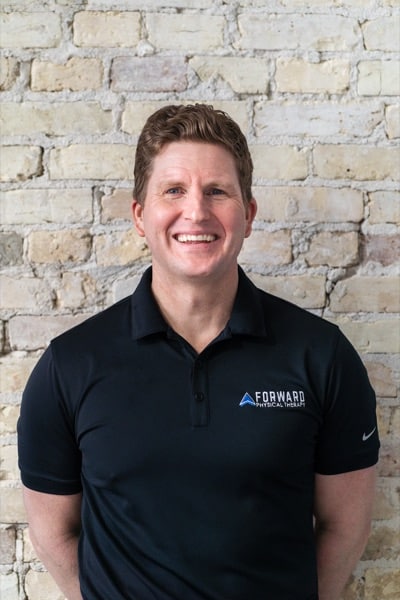
Jedd Wellenkotter, PT, DPT, MS, EPC
Co-Owner | Head of Clinical Operations & Technology
Doctor of Physical Therapy, exercise scientist, and the developer behind Return+ and Lune.