
Behind the Research — Shoulder Pain
This is part of our “Behind the Research” series — where we pull the data from PubMed, the world’s largest database of peer-reviewed medical studies, and answer a simple question: which profession is studying your pain the most?
We have all been there. You can’t reach behind your back to grab a wallet. Putting on a jacket makes you wince. Sleeping on that side is impossible. You catch yourself favoring the arm without even realizing it. Or maybe it’s your kid — your son hurting after baseball, your daughter’s shoulder tightening up after volleyball or swim. Pain like that forces a decision: who do you call? The answer should be a physical therapist practicing in a system with a PT first program — and here is a strong reason why.
Who Are These Researchers?
The researchers publishing this work come from the best universities in the world — and many of them are right here in your own backyard. PhD-level biomechanists, kinesiologists, exercise physiologists, and physical therapists, all working toward a single goal: studying the things that should drive how your provider evaluates and treats you.
The Search
I searched PubMed — the largest database of peer-reviewed medical research in the world, maintained by the National Institutes of Health. Every study listed has been reviewed by other scientists before publication.
I looked at two things. First, the numbers: “[profession]” + “shoulder pain” — same search, same database, same rules, for every profession that treats shoulder pain. Second, the quality: where each profession publishes.
The Results
Source: PubMed. Data as of April 2026.
Physical therapy has published more peer-reviewed studies on shoulder pain than orthopedic surgery, pain management, primary care, and chiropractic combined. Combine all four. PT alone still wins — with room to spare.
Where They Publish
PT research doesn’t live in PT-only journals. It lives in the top tier of medical research — BJSM, JOSPT, Spine, Pain — journals read by PhD scientists, orthopedic surgeons, pain physicians, and neurologists alongside physical therapists.
These are journals with the most rigorous standards. Every study is peer-reviewed for its design, methods, and results by researchers across the broader medical community before it’s published. That is how the rest of medicine knows the research can be trusted.
So What Does This Mean for You?
The vast majority of shoulder pain — rotator cuff strains, impingement, frozen shoulder, post-surgical recovery — responds to conservative care. No surgery. No injections. No imaging required to start treatment.
What does conservative care — guided by nearly 2,000 peer-reviewed studies — actually look like?
It starts with an examination. Range of motion. Strength. Joint mobility. Special testing. Past medical history. What makes it better, what makes it worse. All of it guides how treatment looks from there.
This is what researchers call a clinical prediction rule — a research-backed decision tree that guides treatment based on how you present. Based on what the exam shows, your first session could look like:
- Rotator cuff strain or impingement with painful arc — manual work to calm the joint and surrounding tissue (dry needling, soft tissue, joint mobilization), corrective exercise to retrain scapular control and rotator cuff strength, and a home exercise program to keep progressing between visits.
- Frozen shoulder (adhesive capsulitis) — joint mobilization and capsular stretching matched to your stage, structured aerobic training at the right intensity to reduce central pain sensitivity, strengthening as range allows, and a home program to support recovery between visits. More on frozen shoulder here.
- Post-surgical rotator cuff repair — protocol-based progression matched to the surgeon’s repair, manual work to manage scar tissue and restore mobility, and progressive loading once the tissue can tolerate it.
- Suspected acute tear, dislocation, or red flags — severe weakness, mechanism of injury that suggests instability, or signs of nerve involvement — we screen carefully, protect the area, and refer you for imaging and orthopedic evaluation right away.
Same body part, four completely different presentations, four completely different plans.
That is the power of evidence-based medicine.
In the United States, these are Doctors of Physical Therapy. Their training is built on evidence-based practice — meaning the standard is to follow clinical research-based evidence guidelines. The same research you see in the numbers above is what drives how they are trained to examine and treat you.
PT First
The good news is now you know. And in Wisconsin, you can access one directly — no referral needed.
Wisconsin is a direct access state. You can call a Doctor of Physical Therapy today and be seen — often the same day. No referral. No MRI. No waiting. Same insurance billing whether you have a referral or not.
Start your care where you will eventually end up. You will get better faster and save a whole lot of money while doing it.
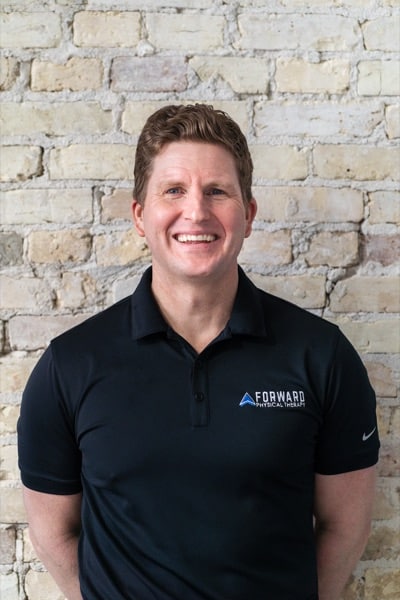
Jedd Wellenkotter, PT, DPT, MS, EPC
Co-Owner | Head of Clinical Operations & Technology
Doctor of Physical Therapy, exercise scientist, and the developer behind Return+ and Lune.