
Shoulder pain deserves a thorough evaluation before any decision about treatment is made. Not an image. Not an injection. An evaluation — by a clinician who understands shoulder mechanics, can identify the source, and knows when conservative care will work and when a surgical referral is the right call.
That is what we do at Forward Physical Therapy.
The Evaluation Is the Treatment
The shoulder is complex. Pain can come from the rotator cuff, the labrum, the AC joint, the biceps tendon, the scapula, the thoracic spine, or the cervical spine. It can be driven by weakness, stiffness, tendinopathy, instability, posture, or training errors. Often it is more than one thing.
Our evaluation screens all of it in one visit. Cervical spine, thoracic mobility, scapular mechanics, rotator cuff strength, special tests, movement patterns, and your activity demands. We identify the source — not just the symptom — and begin treatment the same day. Read: Your Shoulder Hurts. But Is It Your Shoulder?
Conservative Care That Works
For the majority of shoulder conditions — rotator cuff tendinopathy, impingement, frozen shoulder, scapular dysfunction — conservative care is the evidence-based first step. Progressive loading, manual therapy, scapular stabilization, and thoracic mobility work produce lasting results because they address the actual cause.
Tendinopathy is a perfect example. It is a degenerative condition that needs progressive loading to remodel and regain strength. The tendinopathy research community has moved past debate on this — loading is the treatment. We design individualized loading programs based on your specific presentation and stage of healing.
For patients recovering from surgery — rotator cuff repair, labrum repair, total shoulder replacement — our Return+ Total Shoulder program tracks ROM, strength, ASES, and QuickDASH across every phase of recovery with objective data.
When We Refer
Not every shoulder problem is a conservative care problem. Acute traumatic tears, displaced fractures, unstable dislocations, and certain labral injuries may need surgical intervention. Part of our job is recognizing when that is the case and getting you to the right surgeon quickly.
We are independently owned. When we refer, we refer to the surgeon we believe is the best fit for your specific case — not whoever is in our system or whoever tells us to send patients their way. That independence matters. We work alongside orthopedic surgeons in both directions — managing pre-surgical optimization before the procedure and post-surgical rehabilitation after. When surgery is the right path, we make sure the rehab is structured, tracked, and thorough.
What the Evidence Says About the Injection-First Approach
Many patients come to us after receiving one or more cortisone injections that provided temporary relief but did not resolve the problem. The research explains why:
Cortisone injections provide short-term pain relief — typically 3 to 8 weeks — but show no benefit over placebo at 3 months or beyond (Dean et al., BMJ, 2014). The injection addresses the symptom without addressing the cause. When it wears off, the problem is still there.
For tendinopathy, cortisone is particularly concerning. Research published in the Journal of the American Academy of Orthopaedic Surgeons has shown that cortisone inhibits collagen synthesis, impairs tendon cell function, and weakens the tissue (Maman et al., 2016). Patients who receive cortisone before rotator cuff surgery have higher re-tear rates (Puzzitiello et al., American Journal of Sports Medicine, 2020). The injection-first pathway also costs 2–3 times more over 1–2 years when downstream care is included (Rhon et al., 2014). To put it in perspective: the cost of the typical pathway — primary care visit, MRI, orthopedic consult, injection — is greater than 3 times what 20 hours of physical therapy costs with one of the Doctors of Physical Therapy at Forward PT.
Start with the Evaluation
Your shoulder deserves an expert evaluation before any treatment decision is made. We diagnose, we treat, we manage the full recovery — conservative or surgical — and we refer when it is the right call. That is comprehensive shoulder care.
No referral needed. Call (608) 561-7733 or book online.
Related
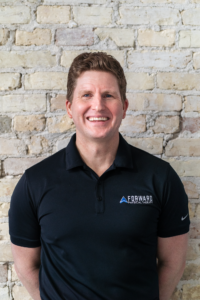
Jedd Wellenkotter, PT, DPT, MS, EPC
Co-Owner | Head of Clinical Operations & Technology
Physical therapist, exercise scientist, and the developer behind Return+ and Lune. DPT from UW-La Crosse, MS in Exercise Science.