
This is why “go for walks” is not a prescription. For many patients, walking never reaches VT1 — it is comfortable but does not produce the physiological changes that reduce pain. For deconditioned patients, walking may already be above VT1 — too hard to sustain, causing flare-ups that get blamed on the activity when the real problem is the dose. The threshold removes the guesswork.
The reason is simple: two thresholds inside your body — VT1 and VT2 — determine how your nervous system processes pain, how efficiently you burn fat, how your cardiovascular system adapts, and how quickly you recover. If your clinician is not finding these thresholds, your exercise intensity is arbitrary.
What Are VT1 and VT2?
VT1 and VT2 are ventilatory thresholds — points during increasing exercise intensity where your breathing pattern changes in measurable ways.
VT1 (First Ventilatory Threshold) is the intensity where your breathing first starts to increase disproportionately to the work you are doing. Below VT1, you can talk comfortably. At VT1, talking becomes noticeably harder — you can still do it, but you would rather not. This is the boundary between easy and moderate exercise.
VT2 (Second Ventilatory Threshold) is the intensity where you can no longer maintain a conversation. Your body is producing lactate faster than it can clear it. This is the boundary between hard and very hard — sustainable for minutes, not hours.
These are not arbitrary heart rate zones from a formula. They are physiological inflection points unique to each person, and they shift as fitness improves. A 65-year-old recovering from knee surgery has different thresholds than a 30-year-old athlete returning from an ACL tear. We find both using the same method.
How We Find Them
We use a graded exercise protocol with the Talk Test — a validated, non-invasive method that identifies VT1 and VT2 without expensive lab equipment. The patient exercises on a treadmill, rower, ski erg, or bike while intensity increases in staged increments. At each stage, we ask them to read a standardized passage aloud.
- When they can speak comfortably: below VT1
- When speech becomes uncertain — they can do it, but it takes effort: VT1
- When they cannot maintain the passage: VT2
We record heart rate, RPE, METs, and equipment settings at each threshold. These become the prescription — not a guess, not an age-based formula, but your actual physiology.
The Talk Test has been validated against gold-standard laboratory gas exchange analysis across multiple studies. It consistently identifies VT1 at the point of equivocal speech and VT2 at the point where speech is no longer possible (Dehart-Beverley et al., Medicine & Science in Sports & Exercise, 2000; Recalde et al., Journal of Sports Sciences, 2002).
Why VT1 Matters: Pain Modulation
This is the threshold that changes how your brain processes pain.
Exercise at or near VT1 activates your body’s endogenous pain relief systems — endorphins, endocannabinoids, and descending inhibitory pathways that dial down pain sensitivity at the spinal cord and brain level. This is called exercise-induced hypoalgesia (EIH), and it is one of the most well-documented phenomena in pain science.
A comprehensive review of the literature found that moderate-intensity aerobic exercise — the intensity zone around VT1 — consistently produces significant reductions in pain sensitivity in both healthy individuals and patients with chronic pain conditions (Naugle et al., Pain, 2012).
For patients with chronic pain — back pain, neck pain, fibromyalgia, osteoarthritis — the nervous system becomes sensitized. Signals that should not hurt start hurting. Movement that used to be painless becomes painful. This is central sensitization, and it is driven by changes in the brain and spinal cord, not just the tissues.
Structured aerobic training at VT1 reverses this process. It resets the gain on the nervous system. The research shows that regular aerobic exercise at appropriate intensity restores normal pain processing, reduces central sensitization, and improves pain thresholds across multiple chronic pain conditions (Sluka et al., Pain, 2018; Rice et al., The Journal of Pain, 2019).
But here is the critical point: it is not the intensity that matters most — it is the timing. The evidence suggests that aerobic exercise at virtually any intensity can activate pain-modulating pathways. Low, moderate, and high intensity all have documented effects on exercise-induced hypoalgesia. The question is which intensity is right for this patient, right now.
For pain patients especially, timing is everything. A high-irritability patient early in care — significant pain, sensitized nervous system, fear of movement — needs an intensity they can tolerate daily without flaring. That is VT1. As irritability decreases and capacity builds, you introduce VT2 intervals for a stronger stimulus. And for a low-irritability patient further along in recovery, high-intensity work may produce the most robust pain relief from the start. None of these intensities are wrong. They are wrong at the wrong time.
Underdosing is as real a problem as overdosing. Too low and the patient does comfortable exercise that feels fine but never reaches the threshold required to change their pain experience. The threshold tells you exactly where to start — and when to progress.
This is why “go for walks” is not a prescription. Walking may be below VT1 for many patients — comfortable, but not therapeutic. And for deconditioned patients, walking may actually be above VT1 — harder than it should be, causing flare-ups that get blamed on the activity rather than the intensity. Without knowing the threshold, you cannot dose the exercise correctly.
Why VT1 Matters: Fat Oxidation and Metabolic Health
VT1 marks the zone of peak fat oxidation — the intensity at which your body burns the highest proportion of fat relative to carbohydrate for fuel. This is real, and it matters for patients with elevated BMI, metabolic syndrome, or chronic disease. But the picture is more complex than “train at VT1 to burn fat.”
High-intensity interval training can produce equal or superior improvements in insulin sensitivity, body composition, and cardiovascular risk markers. The HIIT literature on metabolic health is strong and growing. For the right patient — someone with the capacity, the joint health, and the training base to tolerate it — VT2 intervals may drive faster metabolic adaptation than steady-state VT1 work.
But for the populations we treat most often — patients in pain, patients who are deconditioned, patients with joint limitations, patients who have not exercised consistently in years — the question is not just what produces the best lab result in a controlled study. It is what the patient can do consistently, safely, and without increasing injury risk or burning out after two weeks. VT1-based training is sustainable. Patients can do it daily. It does not require recovery days. It does not spike joint loading. And when sustained over weeks and months, it produces meaningful metabolic change.
We layer VT2 intervals on top when the patient is ready — and for patients who can tolerate it from the start, we do. The threshold data tells us which approach fits the person in front of us.
Why VT2 Matters: Aerobic Capacity and Cardiovascular Health
If VT1 is the foundation, VT2 is the accelerator.
Training at or above VT2 — through interval training — drives improvements in VO2max, stroke volume, and cardiac output that steady-state exercise alone cannot achieve. A meta-analysis of 33 studies involving over 100,000 participants found that every 1-MET increase in cardiorespiratory fitness was associated with a 13% reduction in all-cause mortality and a 15% reduction in cardiovascular mortality (Kodama et al., JAMA, 2009).
That is not a minor finding. Cardiorespiratory fitness is one of the strongest predictors of how long you live — stronger than blood pressure, cholesterol, or smoking status in some analyses. Both VT1 and VT2 training improve cardiorespiratory fitness. High-intensity intervals above VT2 tend to produce faster VO2max gains, but sustained VT1 volume builds the aerobic base that supports those gains long term. You need both.
And this is not just for young or athletic patients. A 70-year-old can do VT2 interval work. The intensity is relative to their thresholds, not to some absolute standard. A 30-second interval at VT2 for a deconditioned older adult might be 3.2 mph at 6% on a treadmill. For an athlete it might be 8 mph at 4%. Both are working at the same physiological intensity relative to their own capacity. Age does not disqualify anyone from high-intensity training — it makes the mortality data more urgent. Every 1-MET improvement matters more the older you get.
We prescribe VT2 intervals once a patient can tolerate VT1 steady-state training without symptom flare — typically 1–2 sessions per week alongside daily VT1 work. The protocols are structured: 30-second bursts with full recovery for early-stage patients, building to 4-minute intervals as capacity improves. Every parameter — work intensity, recovery intensity, duration, rounds — is calculated from the thresholds we measured.
Why Both Thresholds, Not Just One
VT1 and VT2 serve different physiological purposes, and prescribing from both produces results that neither alone can match:
- Pain modulation (EIH)
- Fat oxidation
- Aerobic base
- Nervous system reset
- Recovery between sessions
- 10–20 min steady state
- VO2max improvement
- Cardiovascular adaptation
- Lactate clearance capacity
- Metabolic conditioning
- Mortality risk reduction
- Intervals 1–2x per week
A patient training at VT1 daily is not just getting pain relief — they are building cardiovascular fitness, improving metabolic health, and laying the aerobic foundation that makes everything else work better. Training below VT1 may not provide enough stimulus for meaningful cardiovascular adaptation — which is exactly why finding the threshold matters. At VT1, the system is being challenged. Add VT2 intervals and you accelerate those same adaptations. Both thresholds drive both systems. The difference is degree, not category.
This works in reverse too. The athlete or performance patient who trains at high intensity all the time — CrossFit, HIIT classes, heavy interval work — often has a strong VT2 but a neglected aerobic base. They recover poorly between sessions, burn out, and when they get injured the deconditioning hits fast because they never built the foundation underneath. Adding structured VT1 work improves their recovery, their fat oxidation, and their ability to sustain the high-intensity training they love. Knowing both thresholds tells us what is missing — not just what to add, but what the patient has been skipping.
Our approach leans toward what the exercise science literature calls polarized training — roughly 80% of conditioning volume at or below VT1, and 20% at or above VT2, with very little time spent in between. While the original research comes from elite endurance sport, the principle applies to most people looking to be healthy: a large base of sustainable low-intensity work with strategic high-intensity sessions produces better long-term adaptations than spending all your time at moderate intensity (Seiler, Sportscience, 2010; Stöggl & Sperlich, Frontiers in Physiology, 2014).
In practice, the best approach for most people is a mix — a strong base of VT1 work, regular doses of VT2, and time spent in between when the session calls for it. The polarized model gives us the framework: VT1 and VT2 are the two anchors, and most of the conditioning volume should live at those thresholds rather than defaulting to moderate intensity because nobody measured where the thresholds actually are.
The point is not to avoid the middle zone entirely. The point is to know where VT1 and VT2 are so that every intensity you prescribe is intentional — not a guess.
Why This Does Not Happen More Often
Most clinicians know this matters. The science is not new. The challenge has always been practical: finding ventilatory thresholds, calculating equipment settings across modalities, prescribing structured workouts at the right intensity, and doing it all within the time constraints of a treatment session. Without the right tools, it takes too long. So the aerobic component becomes 10 minutes on a bike at whatever feels moderate — not because the clinician does not know better, but because the workflow does not support it.
That has been the bottleneck in our clinics too. We are pushing hard toward making threshold-based conditioning the standard for every patient — but getting there requires closing three gaps at once. First, the knowledge-to-practice gap: exercise physiology and ventilatory thresholds are covered in DPT programs, but the concepts rarely survive into clinical practice. Students learn it, then go on rotations and into jobs where nobody is applying it. The knowledge dies in the classroom. We are actively training our clinicians to bring it back into every treatment session. Second, the training: even clinicians who understand the science need reps running the protocol and interpreting the results. Third, the software: doing this for every patient, every visit, required tools that did not exist. So we built them.
Our clinicians run a Talk Test in under 15 minutes. The system calculates VT1 and VT2 from the stage data, converts thresholds across equipment — treadmill, rower, ski erg, bike — and generates structured workout prescriptions that drop directly into the treatment plan with one tap. 10-minute VT1 steady state for pain modulation. 20-minute VT1 for fat adaptation. VT2 intervals at the right work-to-rest ratio. All with the patient’s actual heart rate, RPE, and MET targets. No manual calculation.
We run the full threshold assessment during our Health Capacity Exam — a comprehensive aerobic and metabolic baseline on the treadmill, rower, ski erg, or bike, matched to the patient’s condition and goals. From there, the Quick VT tool built into every treatment session lets clinicians re-test and update thresholds as fitness improves — without breaking the flow of the visit.
The result is that threshold-based conditioning is no longer something we aspire to do — it is built into every visit. The software removed the barrier. Now the science actually reaches the patient.
Who Benefits
Every patient. But especially:
- Chronic pain patients — back pain, neck pain, fibromyalgia, osteoarthritis. VT1 training is one of the most effective interventions for central sensitization.
- Post-surgical patients — after knee replacement, hip replacement, ACL reconstruction, spinal surgery. Aerobic fitness predicts recovery speed and outcome quality.
- Patients on GLP-1 medications — Ozempic, Wegovy, Mounjaro. Losing weight without structured exercise means losing muscle. Threshold-based training preserves lean mass while the medication works. Learn more.
- Patients with elevated BMI — VT1 is the most efficient intensity for fat oxidation. Combined with strength training, it produces lasting body composition changes.
- Athletes returning from injury — VT2 intervals rebuild the cardiovascular capacity that was lost during immobilization and early rehab.
- Older adults — every 1-MET improvement in fitness reduces mortality risk by 13%. For a 70-year-old, that is not abstract. That is years of life.
What a Session Looks Like
Once we have your thresholds, conditioning is built into every visit:
VT1 day (most sessions): 10–20 minutes on the treadmill, rower, ski erg, or bike at your VT1 settings. Heart rate monitored. RPE checked. The intensity is precise — hard enough to activate pain modulation and aerobic adaptation, sustainable enough that you leave feeling better than when you started.
VT2 day (1–2x per week): Interval protocol matched to your current capacity. Short work bouts at VT2 intensity with recovery periods calculated from your VT1. We start conservative — 30-second intervals with full recovery — and build as your fitness improves.
As your thresholds shift (and they will), we re-test and update the prescription. What started as 3 mph at 8% becomes 3.5 mph at 10%. The numbers move because the physiology changed. That is measurable progress.
The Bottom Line
Two thresholds. One test. A conditioning prescription that is as precise as your strength program.
If your physical therapist is not measuring your ventilatory thresholds, they are not prescribing aerobic exercise — they are suggesting it. The difference matters.
And once you are programming to your thresholds — and using them to guide your own training outside of the clinic — you are most of the way there. You know what VT1 feels like. You know what VT2 feels like. You know your heart rate targets, your equipment settings, and how to structure a session. That is the goal: not to make you dependent on us, but to give you the knowledge and the numbers to train independently for the rest of your life.
We are building a clinic where every patient gets their thresholds tested. It takes 15 minutes. It changes the entire plan of care. And it gives you something no other intervention can — the ability to keep getting better long after you leave.
Ready to train at the right intensity? No referral needed in Wisconsin. Book your first visit and we will find your thresholds on day one.
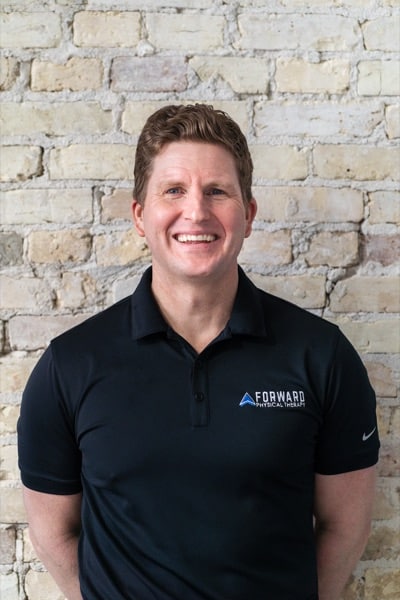
Jedd Wellenkotter, PT, DPT, MS, EPC
Co-Owner | Head of Clinical Operations & Technology
Physical therapist, exercise scientist, and the developer behind Return+ and Lune. DPT from UW-La Crosse, MS in Exercise Science.