
Your annual physical checks your blood pressure. Your cholesterol. Maybe your blood sugar. Then your doctor tells you to exercise more and sends you home.
Nobody measures whether you actually can.
Cardiorespiratory fitness is the single strongest predictor of longevity we have. A 2018 JAMA Network Open study followed 122,007 patients over 23 years. Every 1-MET increase in aerobic fitness reduced all-cause mortality by 13%. No upper limit. The gap between low fitness and below average carries a bigger mortality risk than smoking.
This should be part of every annual physical. It is not. But it could be. That is what the Health Capacity Exam is about.
The Health Capacity Exam
We built it because it should exist. A primary care PT visit. Not because you are injured. Not because you had surgery. Because your physical capacity is a vital sign and it deserves to be tracked like one.
The Health Capacity Exam measures aerobic fitness, grip strength, body composition, and physical activity levels. It captures the data that healthcare should care about but largely does not collect. Grip strength is the single strongest predictor of all-cause mortality. Aerobic capacity determines surgical risk, functional independence, and long-term health outcomes. Body composition flags risks that BMI alone misses.
This is what a physical should include. The tools exist. The research is there. It just needs to be done.
How We Measure Aerobic Fitness
Traditional VO2 max testing requires a metabolic cart, a face mask, and a lab. That is why it stays locked in research institutions. It is expensive, impractical, and hard to repeat.
We use the Talk Test protocol. A submaximal treadmill test that detects ventilatory thresholds by monitoring your ability to speak at progressively increasing workloads. VT1 is where comfortable conversation becomes difficult. VT2 is where you cannot talk at all. These thresholds tell us where your aerobic engine shifts gears.
The Talk Test has been validated against direct gas exchange with a correlation of r=0.94. No mask. No lab. A treadmill and a clinician who knows what to look for.
What makes this approach more valuable than a one-off lab VO2 max test is that it is highly repeatable and sensitive to change. A peak VO2 number from a max-effort lab test can stay flat even when someone has gained meaningful fitness. Ventilatory thresholds move. They reflect real training adaptation. When you are tracking someone across months, that sensitivity is what matters.
What We Are Learning
We integrate aerobic fitness testing into our pre-surgical, post-surgical, and bone loading programs through Return+. What we are learning is that it changes the clinical conversation every time.
A patient with osteoporosis needs high-intensity loading to stimulate bone density. The LIFTMOR trial showed that 85%+ of max is the threshold that moves the needle. If their aerobic base cannot sustain that training intensity, we need to build their engine before we build their bones. Without testing, that gap is invisible.
A patient heading into a total knee replacement has aerobic capacity barely above the high-risk surgical threshold. Post-op immobility drops capacity roughly 0.43% per day. Three weeks of that equals 40 years of aging. Knowing that number before surgery changes the entire pre-op conversation.
A young athlete nine months after ACL reconstruction has passed every strength test. Quad symmetry above 90%. Hop tests above 90%. But her aerobic fitness has dropped 20% since surgery. She feels ready. Her ventilatory thresholds say not yet.
Every time we test it, we learn something we would have missed.
Not Perfect. Getting Better.
We are not claiming we have it all figured out. We are a PT clinic measuring aerobic fitness with a treadmill and a validated protocol. We learn something new every time we run the test. Our thresholds are evolving. Our interpretation is getting sharper. The clinical picture gets clearer with every data point.
What we do know is that not measuring is worse. The data is too important to leave on the table because the tools are not perfect yet.
If Not PTs, Then Who?
Your primary care physician sees you for 7 minutes and does not have a treadmill. A cardiologist sees you after something has already gone wrong. Cardiac rehab is a post-event program. Personal trainers do not have the clinical training to interpret ventilatory thresholds or connect aerobic capacity to surgical risk and disease management.
Physical therapists are the only profession that sits at the intersection of exercise science education, clinical reasoning, and direct patient access in an outpatient setting. DPT programs require exercise physiology coursework. Many PTs enter the profession with exercise science and physiology backgrounds. We have the equipment. We have 30 to 60 minutes with every patient. The reimbursement model supports it.
If physical therapists do not step into this role, nobody will. Aerobic fitness will continue to be the most powerful modifiable health metric that nobody measures. Exercise physiology 101 will continue to sit in textbooks and journals while patients get told to walk more and hope for the best.
That is the gap. And closing it is not optional for us.
The Health Capacity Exam is our version of what that looks like. Aerobic fitness testing is one piece. Grip strength, body composition, physical activity tracking, functional performance. All of it captured. Benchmarked. Tracked over time through Return+.
This is where physical therapy should be heading. Measuring the things that predict health outcomes. Not waiting for injury or disease to bring someone through the door. Getting upstream. Getting proactive. Collecting the data that changes lives.
That is The Forward Push.
Related
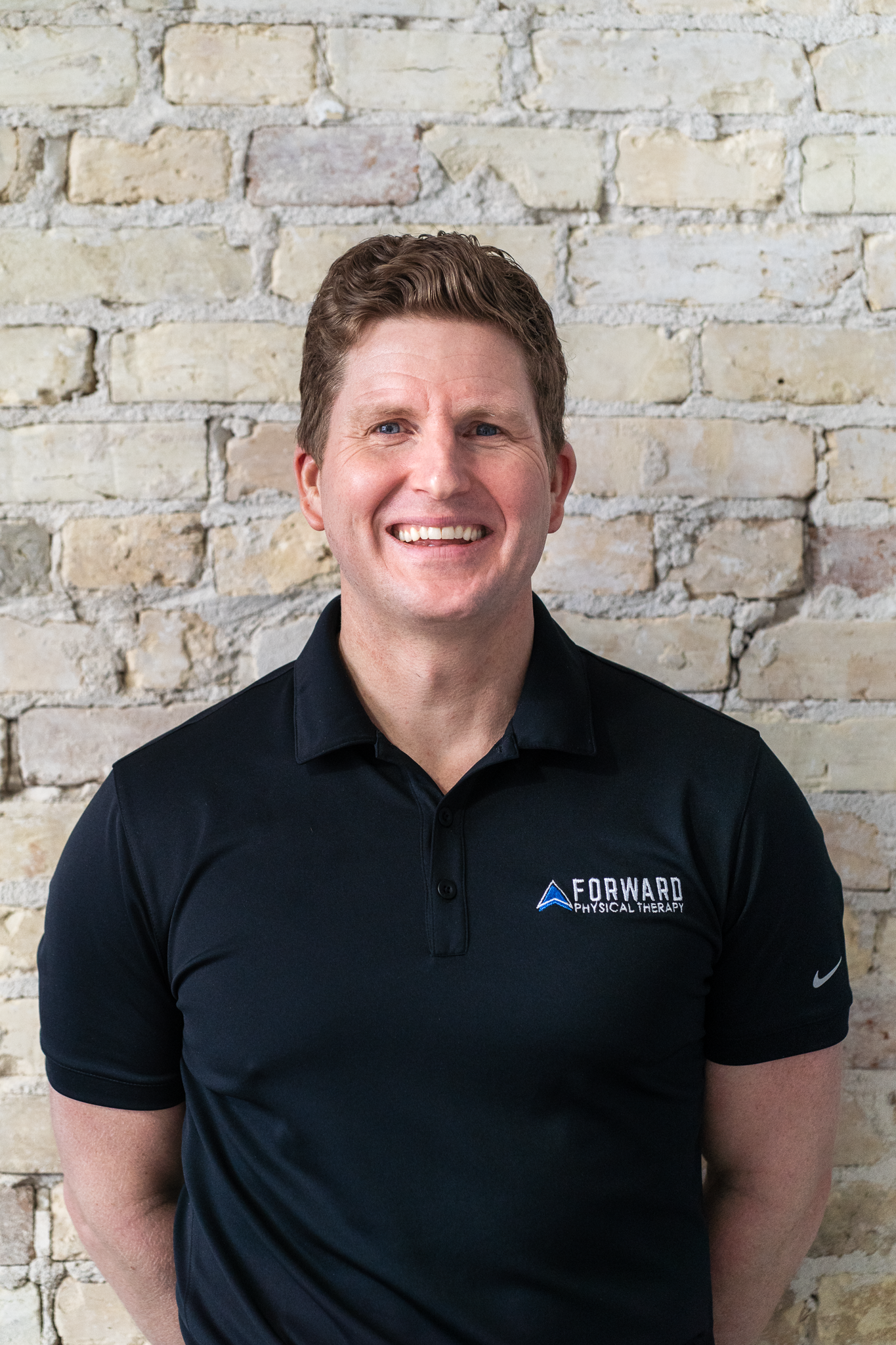
Jedd Wellenkotter, PT, DPT, MS, EPC
Co-Owner | Head of Clinical Operations & Technology
Doctor of Physical Therapy, exercise scientist, and the developer behind Return+ and Lune. Top-100 finisher at the 2015 Ironman World Championships.