
Return+ is a clinical testing platform built for three things: pre-operative care, return to life, and return to sport. The “+” means it goes beyond athletes and beyond sport — ACL rehab, total knee, total hip, total shoulder, shoulder labrum, meniscus, concussion, and health capacity testing all run through the same system.
You shouldn’t have to live near a research institution that happens to be running a study on your condition to get research-level testing. That should be the standard in physical therapy — not the exception. The clinics are the ones seeing the majority of patients. They should be the ones testing at this level. That’s why we built Return+.
What Return+ Is
Return+ is our clinical testing platform. It tracks physical performance across your entire episode of care. Not a snapshot. A trajectory. Every program is built on evidence-based test batteries specific to your condition.
| Program | What We Track | Duration |
|---|---|---|
| ACL Return to Sport | Quad/hamstring strength symmetry, Y-Balance, hop testing (4 types), IKDC, ACL-RSI psychological readiness | Up to 18 months |
| Total Knee Replacement | ROM symmetry, quad/hip strength, gait speed, sit-to-stand power, KOOS JR, aerobic capacity | Up to 1 year |
| Total Hip Replacement | 5-plane hip strength, ROM symmetry, gait assessment, floor transfers, HOOS JR | Up to 1 year |
| Total Shoulder Replacement | 4-plane ROM, PROM to AROM progression, isometric to dynamic strength, ASES, QuickDASH | Up to 1 year |
| Pre-Op Readiness | Baseline strength, aerobic capacity, body composition, functional testing. Identifies what needs work before surgery creates a problem. | Pre-surgical window |
| Osteoporosis Bone Loading | Grip strength (BMD correlate), sit-to-stand power (fall risk), 4-stage balance, body composition, cardio vitals, aerobic threshold | Ongoing |
| Health Capacity Exam | Body composition, grip strength, VO2 max estimation, Physical Activity Vital Sign, functional testing | Single exam + monitoring |
| Concussion | Subjective symptoms, visual/vestibular/cervical screening, convergence, balance | Return to activity protocol |
Pre-Op: The Program Nobody Else Runs
Pre-Op Readiness is a clinical program. Not a handout. Not a couple exercises before surgery.
Pre-Op Readiness is a clinical program. Baseline testing. Structured progression. Measurable goals. We test the same things before surgery that we’ll track after surgery. Strength. Aerobic capacity. Body composition. Functional performance.
Here’s why it matters. A patient going into a total knee with a 40% quad strength deficit and poor aerobic capacity is starting recovery in a hole. Every deficit you walk into surgery with is a deficit you climb out of after. The research is clear. Patients who are stronger going in recover faster, have fewer complications, and hit functional milestones sooner.
You get a head start instead of playing catch-up.
Osteoporosis: Beyond “Walk More”
The standard advice for osteoporosis is weight-bearing exercise and calcium. That’s not wrong. It’s just not enough.
The LIFTMOR trial (Watson et al., JBMR, 2018) showed that high-intensity resistance training at 85%+ of max significantly improved bone mineral density at the lumbar spine and femoral neck. Walking didn’t.
Our Osteoporosis Bone Loading program tracks what actually predicts fracture risk:
- Grip strength. The strongest single predictor of all-cause mortality. Direct correlate of bone mineral density.
- 5x Sit-to-Stand. Lower extremity power. CDC STEADI fall risk cutoff.
- 4-Stage Balance. Falls are the proximate fracture mechanism. Non-negotiable.
- Body composition. Osteosarcopenia screening. Combined muscle and bone risk.
- Aerobic capacity. Can the patient sustain the training intensity needed for bone loading?
This isn’t a walking program. It’s supervised, progressive, evidence-based bone loading with objective tracking.
The Data Makes the Call
Every test has a threshold. Quad strength: 90% limb symmetry or better. Hop testing: 90% across 4 tests. IKDC: 85 or higher. Gait speed: 3.9 ft/s for community ambulation. Sit-to-stand: 12 seconds or less.
When you meet the criteria, the data shows it. When you don’t, it shows that too. And it shows exactly what needs more work.
No guesswork. No premature clearance. No “you seem ready.”
Why This Doesn’t Exist Everywhere
Because it’s hard. It requires a system that tracks tests across visits, calculates symmetry indices, generates goals from deficits, and produces reports that surgeons and insurance companies can read.
Building this required a system that tracks tests across visits, calculates symmetry indices, generates goals from deficits, and produces reports that everyone can read.
We built Return+ because we needed it. Our patients needed it. The profession needs it.
The Forward Push
This is what we mean when we say we’re pushing the profession forward. Not marketing slogans. Data. Pre-op programs that actually prepare people for surgery. Bone loading protocols backed by research. 18-month tracking for ACL patients instead of clearing them based on arbitrary timelines that have nothing to do with whether they’re actually ready.
Every metric tracked. Graphed. Reported. When a surgeon asks if a patient is ready, we don’t send a letter. We send numbers.
That’s the standard. That’s what Forward means.
Related
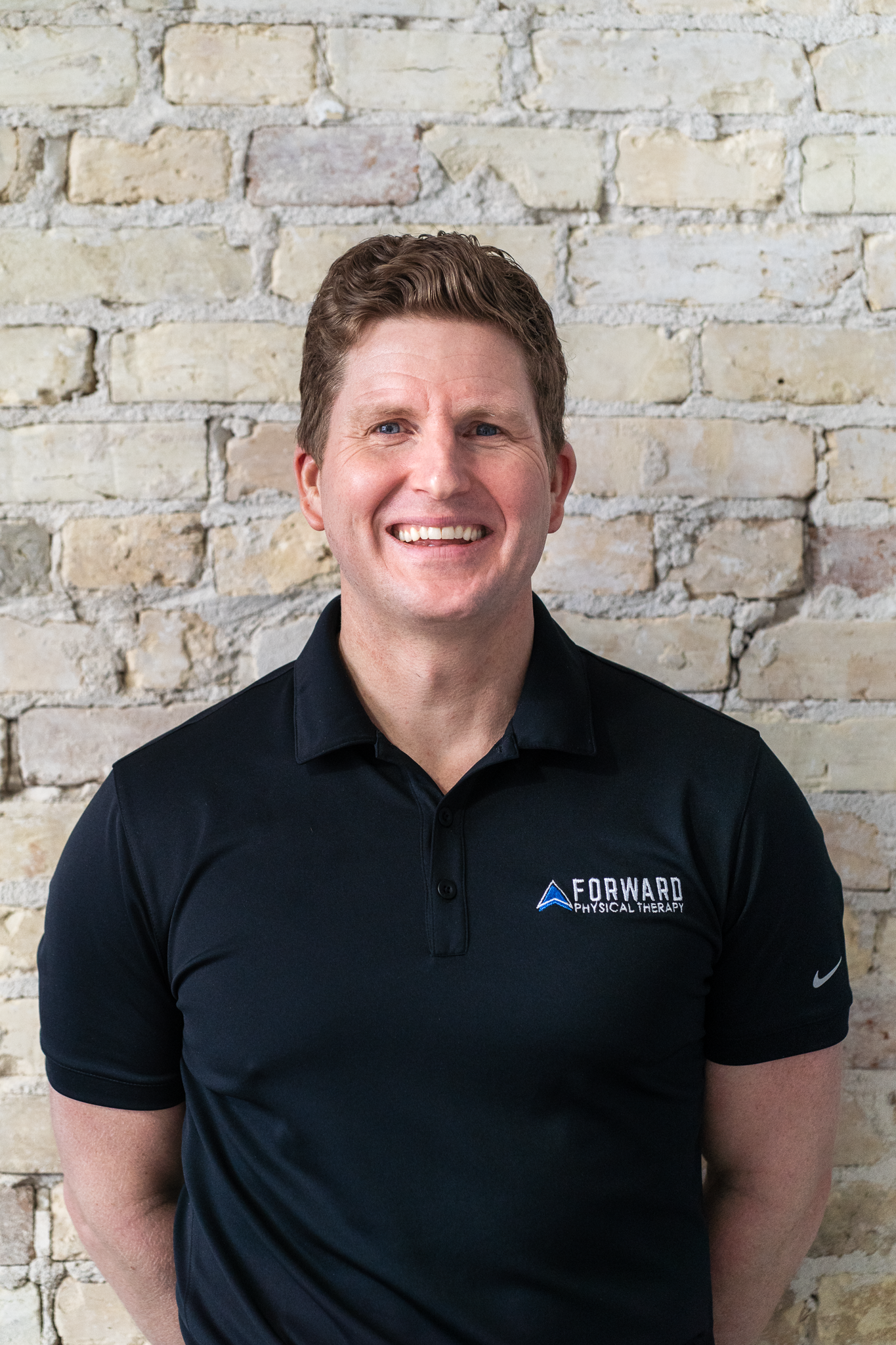
Jedd Wellenkotter, PT, DPT, MS, EPC
Co-Owner | Head of Clinical Operations & Technology
Doctor of Physical Therapy, exercise scientist, and the developer behind Return+ and Lune. Top-100 finisher at the 2015 Ironman World Championships.