
If you want a muscle to get stronger, you load it. If you want a tendon to adapt, you stress it. If you want bone to get denser, you give it a reason to.
This is the overload principle. Wolff’s Law. Tissue adapts to the demands placed on it. Every exercise science student learns this in their first semester. It applies to every biological system in the body, including bone.
So why is the standard advice for osteoporosis still “walk more and take calcium”?
Walking Does Not Load Bone Enough
Walking is good for a lot of things. Cardiovascular health. Mental health. General activity. But it does not produce the mechanical stimulus required to drive bone density improvements at the spine or hip. The loads are too low. The stimulus is too repetitive. Bone has already adapted to it.
The LIFTMOR trial confirmed what exercise science has always known. Postmenopausal women who trained at 85%+ of their max with deadlifts, squats, overhead press, and impact loading saw significant improvements in bone mineral density at the lumbar spine and femoral neck. The group doing low-intensity home exercises did not. No serious adverse events in either group.
That result should not surprise anyone. A system that is not stressed has no reason to adapt.
What a Real Program Looks Like
Our Osteoporosis Bone Loading program runs 24+ weeks across four phases. It is not a list of exercises. It is a structured, progressive protocol built on the LIFTMOR evidence with clear criteria for advancement at every stage.
Phase I — Foundation (Weeks 1-4)
Motor learning and form. Loading starts at 60% of 1RM. Deadlift, back squat, overhead press, all 5×5. Impact loading begins with jumping chin-ups, heel drops, and farmer’s walks. Balance training starts with tandem stance and single leg stance.
The goal is not intensity yet. The goal is that the patient moves correctly under load and builds confidence. Progression criteria: 5×5 with correct form at the prescribed weight.
Phase II — Progressive Loading (Weeks 5-12)
Load increases to 75% of 1RM. Impact volume increases. Balance progresses to eyes closed and foam surfaces. Jogging progressions begin.
This is where the patient starts to feel what real loading demands. Progression criteria: 5×5 at 75% with good form for two consecutive sessions.
Phase III — Peak Loading (Weeks 13-24)
85% of 1RM. This is where bone density changes happen. Rest periods increase to 150 seconds between sets because the loads demand it. Box jumps are added. Farmer’s walks go heavy. Balance becomes reactive and perturbation-based.
Progression criteria: 5×5 at 85% for four consecutive sessions. The patient is now training at the intensity the LIFTMOR evidence says produces results.
Phase IV — Maintenance (Weeks 25+)
85% is maintained. The structure matches Phase III. Re-testing through Return+ every 12 weeks to confirm gains are holding. The patient knows the movements, knows the loads, and knows their body. The focus shifts to sustainability and independence.
Conditioning by Ventilatory Threshold
High-intensity resistance training is demanding. A patient’s aerobic base has to support the work. We do not guess at conditioning intensity. We measure it.
During the Talk Test, we identify two ventilatory thresholds. VT1 is where comfortable conversation becomes difficult. VT2 is where the patient can only get out a few words. These thresholds define training zones that are specific to each individual. Not a formula. Not a percentage of max heart rate. An actual physiological marker detected in the clinic and used to program conditioning intensity across all four phases.
| Phase | Conditioning | Intensity |
|---|---|---|
| Phase I | 10 min easy | Below VT1. Patient can hold comfortable conversation. |
| Phase II | 10 min easy to moderate | Start below VT1, build into VT1-VT2 zone in last 3-4 min. |
| Phase III | 12 min moderate to hard | 2 min moderate (VT1-VT2) / 1 min hard (above VT2) x3, finish 3 min easy. |
| Phase IV | 12 min moderate to hard | Same as Phase III. Patient self-monitors zones. |
By Phase IV, the patient knows their Talk Test zones. They can self-regulate intensity on a rower, echo bike, ski erg, or treadmill without a clinician cueing them. That is the endgame. Independence backed by objective data.
Measured at Every Stage
Every 12 weeks, we re-test through the Return+ osteoporosis battery. Grip strength, which is a direct correlate of bone mineral density and the strongest single predictor of all-cause mortality. 5x sit-to-stand for lower extremity power and fall risk. 4-stage balance from the CDC STEADI protocol. Body composition for osteosarcopenia screening. And the Talk Test to see if aerobic thresholds have shifted.
The data tells us if the program is working. If grip strength is climbing, sit-to-stand times are dropping, balance is progressing, and ventilatory thresholds are moving up, the patient is adapting. If not, we adjust. That is the difference between a program and a handout.
The Standard Should Be Higher
None of this is revolutionary. Load tissue, it adapts. Measure capacity, prescribe appropriately, track outcomes. These are basic principles of exercise science applied to a population that deserves better than a pamphlet and a calcium supplement.
The research has been clear for years. The tools are accessible. It just takes a commitment to doing it right.
Related
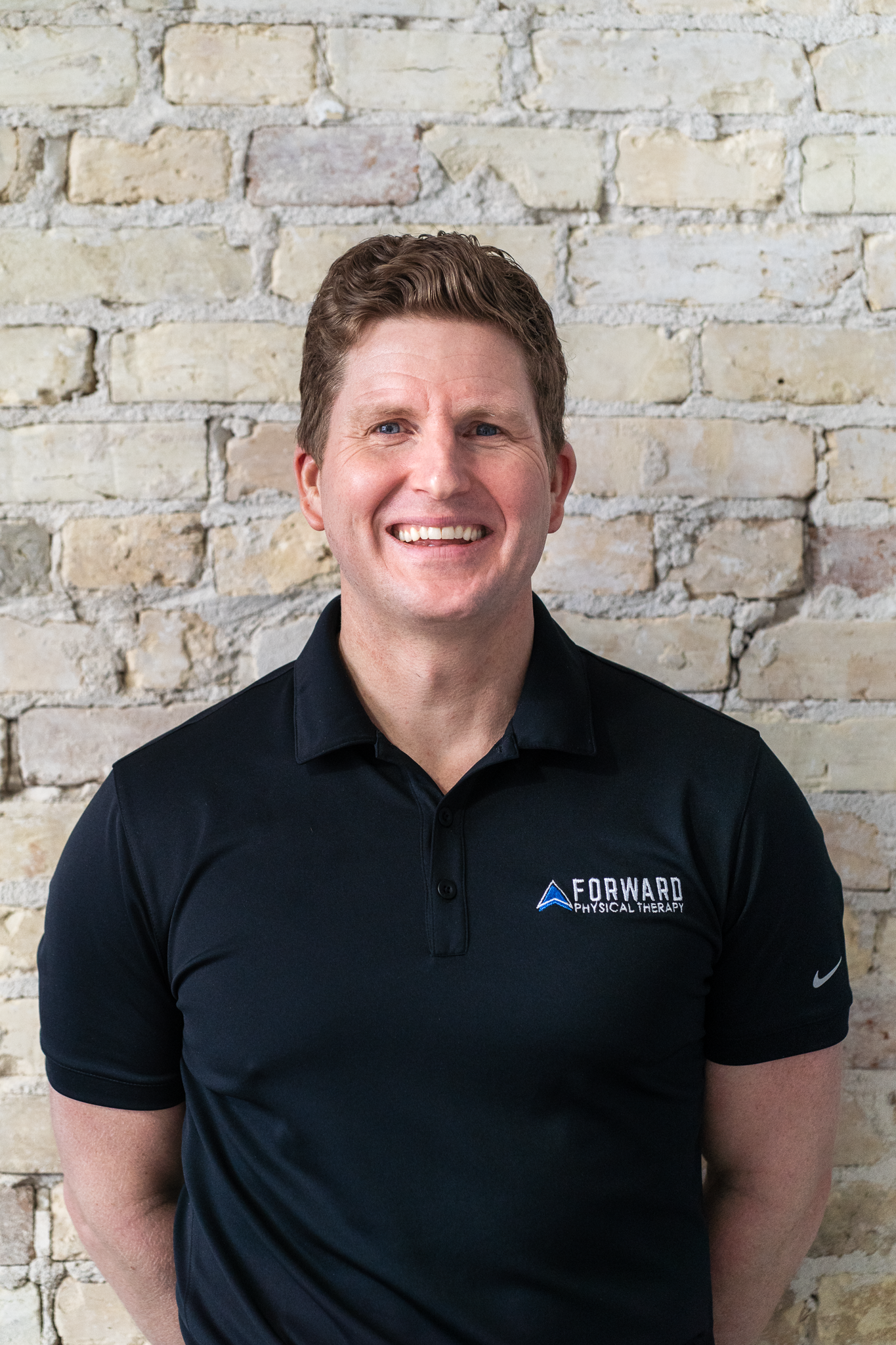
Jedd Wellenkotter, PT, DPT, MS, EPC
Co-Owner | Head of Clinical Operations & Technology
Physical therapist, exercise scientist, and the developer behind Return+ and Lune. Top-100 finisher at the 2015 Ironman World Championships. DPT from UW-La Crosse, MS in Exercise Science.