
If you’re a runner, a pickleball player, a tennis player, a hiker — an active adult in any sense — and you’re facing a joint replacement, you deserve to know that your rehab is going to be structured around getting you back to those activities. Not just “doing well.” Not just “tolerating exercise.” Back to your life.
The reality is that most post-surgical rehab isn’t built this way. There’s no structured testing protocol. No objective thresholds for when you’re ready to run again, or load your knee on a tennis court, or trust your hip on a hike. The surgery gets done — and it’s often done well — but the rehab that follows rarely has a system designed to return you to the lifestyle you had before.
We think that needs to change. And the evidence backs it up.
What the Research Actually Says
A 2022 meta-analysis by Witjes et al. in The Knee examined 4,811 total knee replacements across 6 studies with GRADE-level certainty. The finding: high physical activity after TKA does not increase revision risk through 12 years. In fact, the high-activity group had better implant survivorship — 98.0% vs 95.3% for the low-activity group.
That’s not a marginal finding. That’s the most rigorous evidence we have saying that staying active after a total knee isn’t just safe — it may be protective.
For total hips, Hesseling et al. (2023) found that 73.6% of patients who ran before surgery returned to running afterward. At 5-year follow-up: no loosening, no abnormal migration, no excessive wear.
The Numbers
| Population | Return Rate | Source |
|---|---|---|
| TKA patients returning to any sport | 70–88% | Oehler et al. 2020; Dagneaux et al. 2021 |
| THA patients returning to sport | 76–85% | Hoorntje et al. 2018 |
| Pre-op runners returning to running (THA) | 73.6% | Hesseling et al. 2023 |
| Racket sports (tennis, pickleball) after TJA | 71.9% | 2025 systematic review |
| High-impact sports (basketball, racquetball) after TKA | 32/33 successful | Bonnin et al. 2008 |
One case report documented a TKA patient completing an Olympic-distance triathlon — including a 10K run — before the one-year mark.
Can I Run After a Total Knee or Hip Replacement?
Yes. Hesseling et al. (2023) found that 73.6% of patients who ran before hip replacement surgery returned to running afterward — with no loosening, no migration, and no excessive wear at 5-year follow-up. For total knees, Faldini et al. (2025) published the first systematic review and structured protocol specifically for returning to running after TKA, concluding it is feasible with appropriate rehab progression.
The key is structured progression — building quad strength, restoring gait mechanics, and gradually increasing ground reaction forces before adding mileage. A running stride generates 2–3x body weight per step. Your rehab needs to prepare your body for that load, and the only way to know you’re ready is to test it.
Can I Jump After a Joint Replacement?
Jumping is classified as high-impact, and it’s embedded in many of the activities people want back — basketball, volleyball, hiking down steep terrain, playing with kids. Bonnin et al. (2008) followed 31 patients doing high-impact activities including basketball and racquetball after TKA. At 4-year follow-up, 32 of 33 knees had successful clinical and radiographic outcomes. Patient satisfaction averaged 9.1 out of 10.
The question isn’t whether jumping is categorically safe or unsafe. It’s whether your quad strength, landing mechanics, and joint stability are ready for it. That’s measurable.
What About Hiking, Tennis, Pickleball, Basketball?
Hiking and steep terrain: Downhill hiking loads the knee at 3–4x body weight — similar to running. A 2025 study in Orthopædics & Traumatology found that downhill skiing after TKA is safe for experienced participants with good rehab outcomes. If skiing is on the table, hiking certainly is — with adequate quad strength and balance.
Tennis and pickleball: A 2025 systematic review found 71.9% of racket sport players returned to play after total joint replacement, most within 6 months and at the same skill level. Multiple studies showed no increase in revision rates at 7–8 year follow-up for tennis players.
Basketball: Bonnin et al. (2008) directly studied basketball players after TKA — cutting, jumping, pivoting — with successful outcomes at 4 years. This is the highest-impact activity studied, and the data supports it.
How Much Impact Is Too Much?
This is the question everyone asks, and the answer has changed. The 2022 Witjes meta-analysis — the most rigorous evidence available — found that high physical activity after TKA does not increase revision risk through 12 years. The high-activity group actually had better implant survivorship: 98.0% vs 95.3%.
The concern was always that impact would wear out the implant faster. The data says the opposite — staying active appears to be protective. The limiting factor isn’t the implant. It’s whether your body is prepared for the activity. Quad strength, hip stability, gait mechanics, aerobic capacity — these are the variables that determine whether impact is safe for you, and they’re all testable.
That’s the entire point of structured post-operative testing. Not to restrict activity, but to make sure you’re ready for it.
What About Golf, Weightlifting, and the Gym?
Golf: Widely considered safe after both TKA and THA. A golf swing generates moderate rotational force through the lead knee and hip, but multiple studies classify it as intermediate-impact with no increased revision risk. Most patients return to golf within 3–6 months.
Weightlifting and gym training: Progressive resistance training isn’t just safe — it’s therapeutic. Quad strength is the single most important predictor of functional outcomes after TKA. Deadlifts, squats, leg press, and structured loading all have a place in post-surgical rehab when progressed appropriately. A replaced joint with strong surrounding musculature is a more stable, more durable joint.
Swimming and cycling: Both are low-impact and generally resumed early in rehab. Cycling is often one of the first activities reintroduced. No restrictions in the literature.
Stairs, Kneeling, and Daily Function
These aren’t glamorous, but they’re the activities that determine independence. Stair climbing loads the knee at 3–4x body weight — comparable to hiking. Kneeling comfort varies by implant design and surgical approach, but many patients return to kneeling with time. Our Return+ programs track functional milestones like sit-to-stand power, gait speed, and floor transfers specifically because these daily activities matter as much as anything else.
When Can I Start? The Timeline Question.
There’s no universal timeline, and that’s the point. Calendar-based clearance — “you can run at 6 months” — doesn’t account for whether your body is actually ready. Two patients at 6 months post-TKA can have completely different quad strength, gait mechanics, and joint stability.
Our approach is criterion-based. You progress when the data says you’re ready. Gait speed above 3.9 ft/s. Sit-to-stand under 12 seconds. Quad symmetry above 90%. These thresholds are grounded in the literature and tracked across every phase of your recovery through Return+.
That said, general timelines from the research: most patients return to low-impact activities (cycling, swimming, golf) by 3–4 months, intermediate activities (hiking, doubles tennis, pickleball) by 4–6 months, and higher-impact activities (running, singles tennis, basketball) by 6–12 months — provided they meet the criteria.
Am I Too Old for This?
No. The Witjes meta-analysis included patients across the age spectrum and found no increased revision risk with high activity. Oehler et al. (2020) found that patients 55 and under had the highest activity gains after TKA, but patients of all ages returned to meaningful activity. Age is not the determining factor. Strength, balance, aerobic capacity, and joint stability are — and all of those are trainable and testable.
This Isn’t About Sport. It’s About Your Life.
A 62-year-old who runs three mornings a week isn’t training for a race. They’re maintaining the routine that keeps them healthy, independent, and sane. A couple playing pickleball twice a week isn’t competing — they’re socializing, staying active, and doing the thing that makes retirement worth it. A weekend basketball game with your kids isn’t the NBA. It’s fatherhood.
A joint replacement should solve a problem, not strip away your lifestyle. The surgery restores the joint. The rehab should restore everything else — and that requires a system built to test and progress you toward the specific activities that define your day-to-day life.
The Gap: No One Built the System
The evidence supports returning to these activities. Patients want to return to these activities. But until now, there hasn’t been a structured protocol to test and progress them toward getting there.
The ACL world figured this out years ago — criterion-based testing with objective thresholds for strength, hop performance, and psychological readiness. That same infrastructure has never existed for total joint patients. The 2025 Faldini systematic review proposed the first structured return-to-running protocol specifically for TKA, acknowledging that this gap has persisted for decades.
This is exactly where we focused when building Return+. Our Total Knee and Total Hip programs track quad and hip strength symmetry, gait speed, sit-to-stand power, ROM, balance, aerobic capacity, and patient-reported outcomes across every phase of recovery — from the first week through one year. The same structured, evidence-based testing that drives ACL clearance decisions, applied to the people who need it just as much.
A 65-year-old getting a total knee deserves the same testing rigor as a 20-year-old tearing their ACL. The activities look different. The standard of care shouldn’t.
What Matters Before Surgery
Pre-operative fitness is one of the strongest predictors of post-operative outcomes. Progressive resistance training before surgery improves post-op knee extensor strength and functional performance (Frontiers in Sports and Active Living, 2022). Patients who are stronger going in recover faster, hit milestones sooner, and get back to the activities they care about with less friction.
This is why our Return+ testing starts before the operating room when possible. Baseline measurements give us a roadmap. They tell us where you are, what needs work, and what your realistic trajectory looks like — so that when surgery happens, we’re not starting from scratch. We’re building on a foundation.
The Implant Question
For patients planning to stay active, the research offers some guidance on surgical decisions:
- Cementless fixation may be preferable for active patients — biological bone ingrowth provides potentially more durable fixation at higher activity levels (Faldini et al. 2025; PMC systematic review)
- Anterior approach THA shows faster early return to activity (51% within 6 months vs 44% for posterior), though long-term outcomes are equivalent between approaches
- Implant survivorship in active patients is comparable to or better than sedentary patients through 12 years of follow-up
These are conversations to have with your surgeon. What we bring to the table is the structured testing to make sure you’re ready for the activities you want — regardless of which approach or implant was used.
The Standard We Set
The evidence is clear: staying active after a joint replacement is safe, achievable, and possibly protective of your implant. The question has shifted from “should patients be active” to “how do we get them there systematically.”
That’s what we built Return+ to answer. Phase-by-phase testing. Objective thresholds. Longitudinal tracking. Reports that you, your surgeon, and your insurance company can read. Applied to every total joint patient, not just athletes — because returning to your life deserves the same precision as returning to a sport.
Related
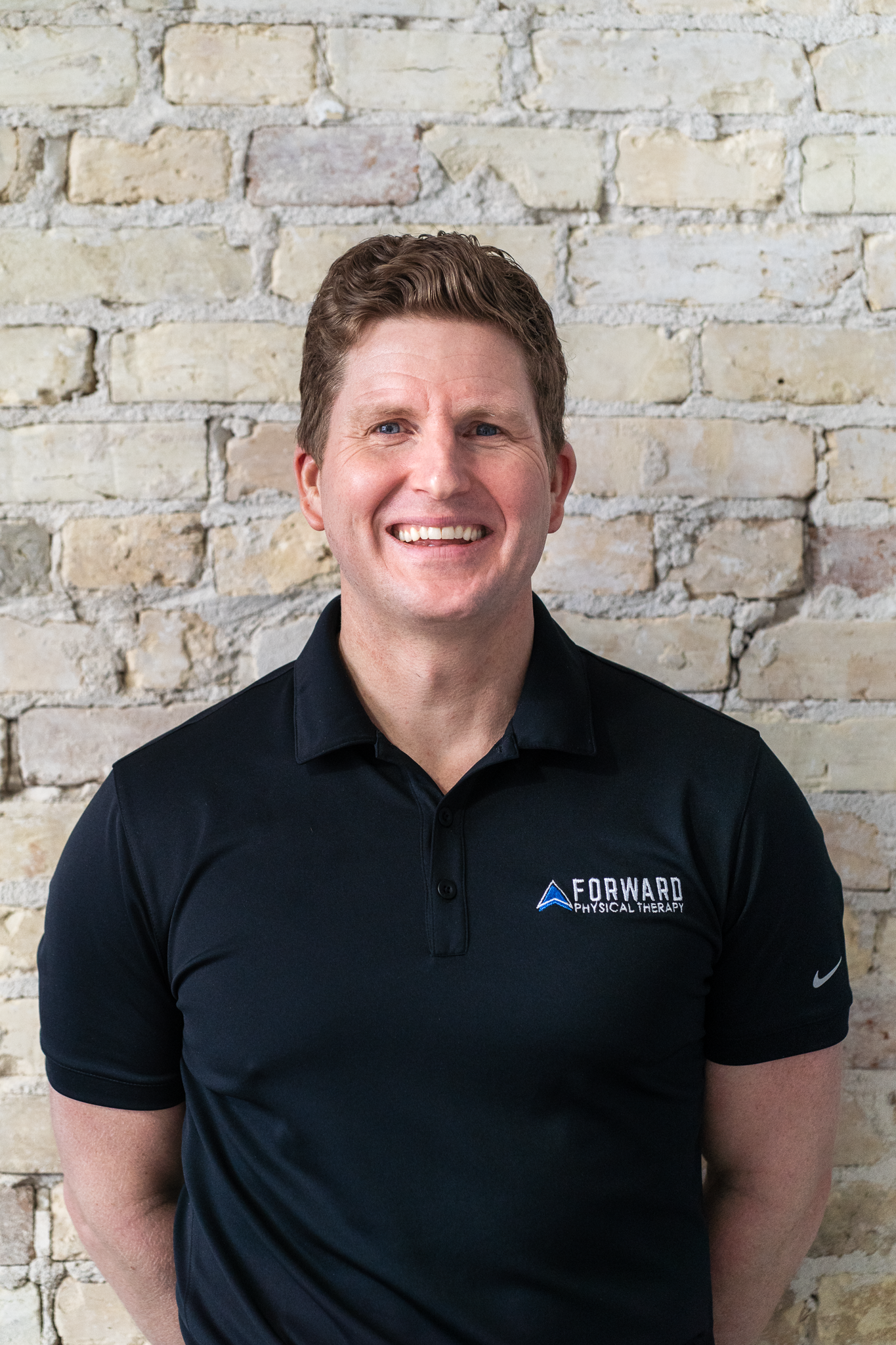
Jedd Wellenkotter, PT, DPT, MS, EPC
Co-Owner | Head of Clinical Operations & Technology
Physical therapist, exercise scientist, and the developer behind Return+ and Lune. DPT from UW-La Crosse, MS in Exercise Science.